
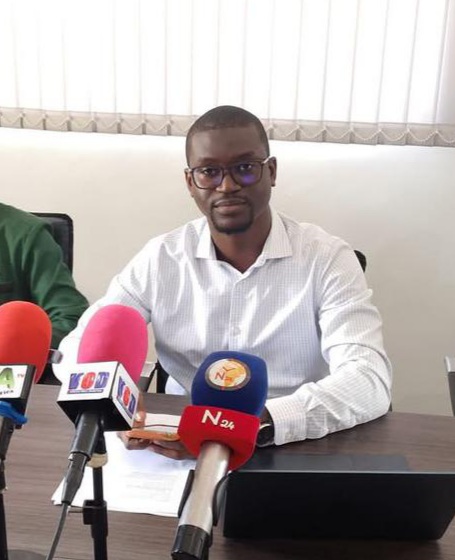
At a press conference held Thursday, June 11, 2026, in Kololi, Gambia, renewed calls were made for the immediate operationalisation of the commission, accusing the government of delaying a process they say is already near completion.
Speaking at the event, Marr Nyang, Chief Executive Officer of Gambia Participates, said the only remaining step needed to activate the Anti-Corruption Commission is the swearing-in of commissioners by the Office of the President.
“We believe the only thing standing between the Gambian people and having a strong, independent, effective commission is the Office of the President by simply conducting the swearing-in ceremony of the Anti-Corruption Commissioners,” Nyang told journalists.
The Anti-Corruption Commission was established to investigate and prevent corruption, promote transparency, and strengthen accountability within public institutions. Many Gambians had hoped the institution would mark a turning point in the country’s governance reforms following years of demands for stronger anti-corruption mechanisms.
However, months after commissioners were identified and logistical preparations reportedly made, the commission has yet to begin operations.
According to Nyang, Gambia Participates wrote to the Office of the President two months ago seeking clarification on the delay, but the organisation says no public explanation has been provided.
For civil society advocates, the delay risks weakening public confidence in the government’s commitment to fighting corruption.
“The absence of an active Anti-Corruption Commission is due to the failure of the Office of the President to complete the process and communicate to the public the reasons behind the delay,” Nyang said.
The organisation also questioned the government’s broader record on accountability, citing several high-profile cases and investigations that drew public attention but yielded little visible action.
Among the cases cited were the Russian oil scandal, the airport security report controversy, the SEMLEX issue, and concerns surrounding the disposal of assets linked to past corruption-related investigations.
Nyang further referenced the findings of previous investigative commissions, including inquiries into alleged corruption cases dating from 1994 to 2017. While reports and recommendations were produced, he argued that implementation has been inconsistent and, in some instances, selective.
“We kind of perceive that this government is tolerant of corruption and intolerant of anti-corruption,” he said.
The remarks reflect growing frustration among sections of civil society who believe anti-corruption efforts in the country have slowed despite repeated promises of reform.
Transparency advocates argue that the Anti-Corruption Commission is especially important at a time when public concerns over the management of state resources continue to increase.
Nyang cited allegations surrounding the D700 million food assistance programme implemented in 2021, claiming that some materials intended for vulnerable families were allegedly diverted during distribution.
He maintained that international partners have already committed support toward the establishment of the commission and that arrangements have reportedly been made to secure office space for its operations.
According to Gambia Participates, the continued delay now appears to be more political than logistical.
For many Gambians, the operationalisation of the Anti-Corruption Commission represents more than the creation of another public institution. Supporters believe it could serve as a test of political will and a signal of whether accountability reforms promised in recent years will truly materialise.
As public scrutiny intensifies, pressure is mounting on authorities to explain the delay and move forward with the swearing-in process.
Until then, questions surrounding transparency, accountability, and the government’s anti-corruption agenda are likely to remain at the centre of national debate.
Author: Kaddy Sowe & Fatou S. Sanyang
PC: CEO Marr Nyang
Comments (0)
No comments yet. Be the first to comment!