
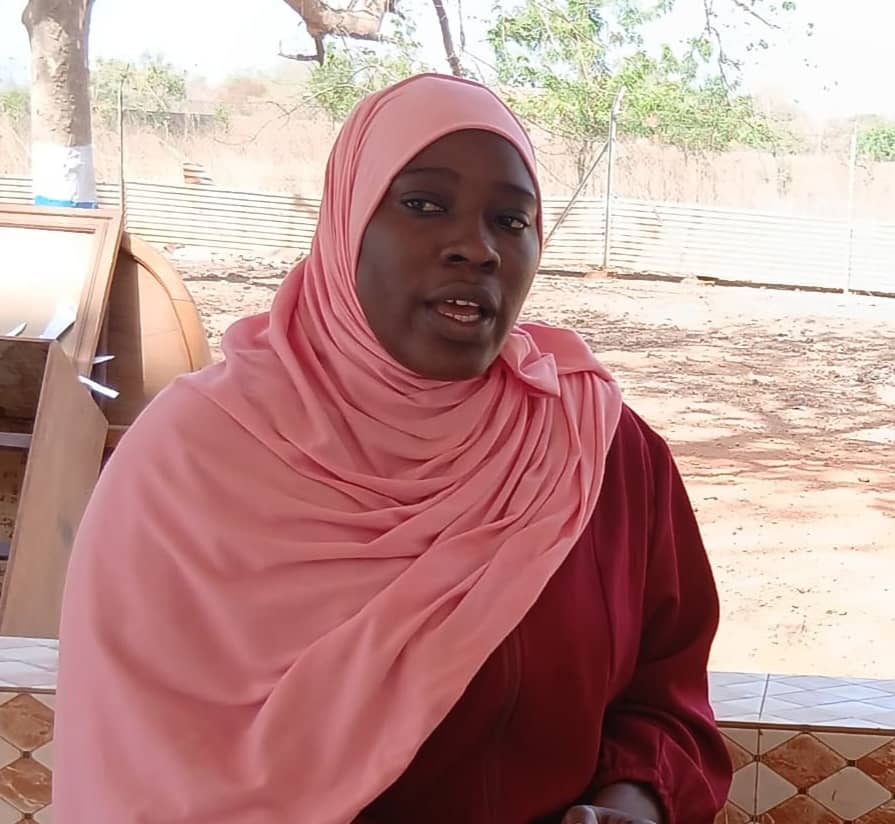
Ceesay noted that while FGM was once widely practised in her community, attitudes are gradually changing. According to her, the practice is no longer as widespread as it used to be, signalling a shift in awareness and perception.
Although she is not a survivor herself,
Ceesay shared the deeply personal experiences of those close to her.
“I have friends who are survivors. I currently live with a friend who is a survivor,” she said during an interview in March 2026.
She explained that her friend continues to live with emotional and physical trauma.
“She tells me that whenever she hears people discussing FGM, she cannot participate because she knows the pain she is going through. She even admits that she is afraid of marriage because of her condition.”
At their dormitory, Ceesay said, peers have noticed the survivor’s hesitation to interact with men—an impact she attributes directly to the trauma of Female Genital Mutilation/Cutting (FGM/C).
Recounting a particularly distressing experience, Ceesay said her friend struggled with severe complications after undergoing the practice.
“She told me that after undergoing the practice, she found it difficult to urinate. When she told her mother, her grandmother revealed that she had been circumcised and ‘sealed.’ She had to be taken back to a circumciser to be reopened. She was crying as she explained this to me,” Ceesay recalled.
Drawing from her background as a nursing student, Ceesay highlighted the medical realities associated with FGM.
“Some may undergo the process and not see immediate effects, but others are deeply scarred for life. People must conduct more research to truly understand the negative impacts,” she urged.
On the legal front, she acknowledged that while awareness of the ban on FGM has increased, the practice persists in some areas.
“Some families still smuggle their children to be cut to fulfil what they view as a traditional obligation,” she noted.
Ceesay also challenged widely held myths used to justify the practice, including claims about the abnormal growth of the clitoris in uncircumcised girls.
“I am not circumcised, and I am perfectly normal,” she stated, adding that her family does not practice FGM and that she actively engages her siblings in conversations to educate others.
As a practising Muslim, she emphasised that her religious beliefs have never required her to undergo the practice.
“Not being circumcised has never affected my ability to practice my religion,” she said.
Despite the challenges, Ceesay remains hopeful about the future.
“I believe that in the next five years, FGM can be eradicated. All that is required is to ensure the law is fully implemented.”
This story is part of the "Breaking the Silence: Voices of FGM Survivors" podcast funded by the Foundation for Women's Health, Research and Development (FORWARD UK).
Author: Nelson Manneh
Comments (0)
No comments yet. Be the first to comment!