
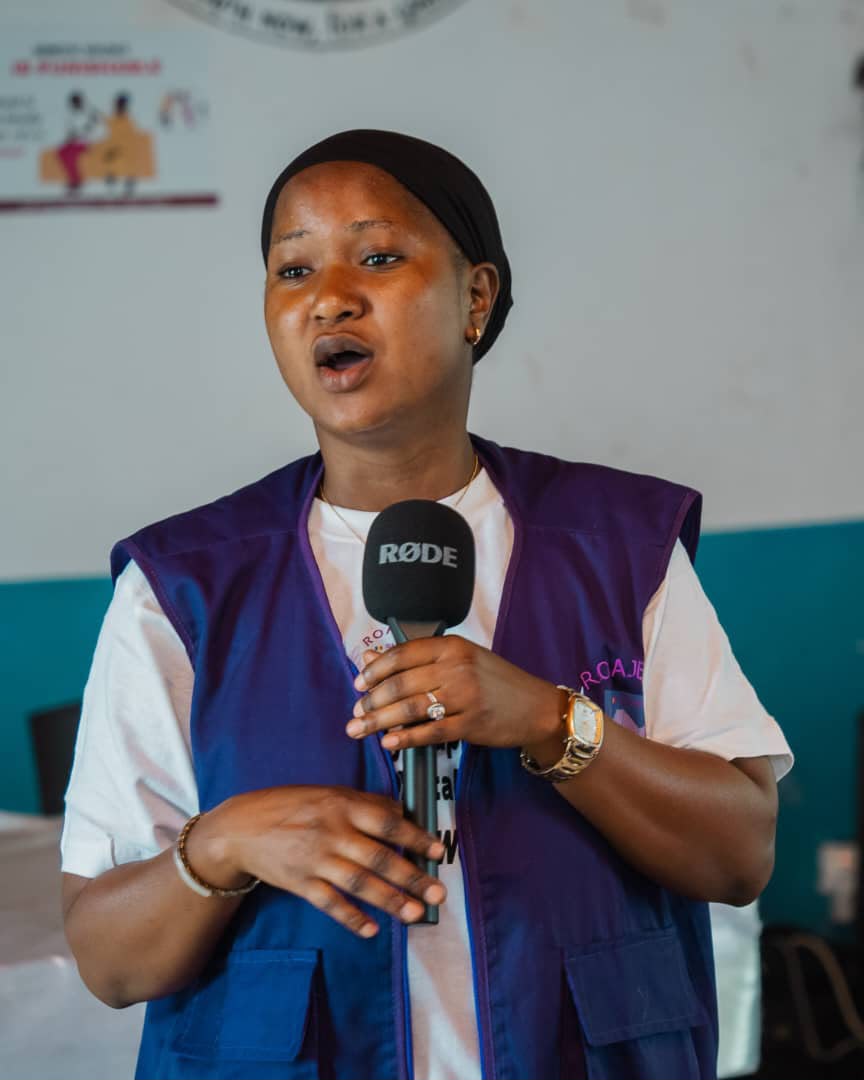
A social worker, young mother and long-time women’s rights activist, Cham has spent years working with women, girls and communities.
Speaking to this medium in August, 2026, although she is not a survivor of FGM herself, her encounters with survivors have shaped her understanding of the practice and strengthened her determination to challenge it.
“As a young mother, and then as an activist who has been into this for a very long time, FGM means a human rights violation,” Cham says.
Her conviction has been shaped by the stories of women and girls she has encountered through her work. In communities where FGM remains deeply rooted, speaking against the practice can mean challenging family expectations, cultural traditions and beliefs passed down through generations.
For Cham, however, silence is not an option.
Giving Survivors a Voice
“I am not a survivor of FGM, but I have known quite a lot of people who have gone through this practice, and they have been going through a lot of issues,” she says.
Cham believes personal experience is not a requirement for advocacy. What matters, she says, is the willingness to listen to survivors, understand their experiences and stand beside those who may not have the confidence or platform to speak for themselves.
Yet many survivors find it difficult to speak openly about what they experienced.
“In most cases, they don’t want to come out to express themselves,” Cham says.
Fear of stigma, judgement and discrimination can prevent survivors from sharing their stories. Some may also fear damaging family relationships or facing rejection from their communities.
Cham therefore believes that creating safe spaces must be at the centre of efforts to end FGM.
“It’s all about creating the safe space and having the dialogue and then the advocacy,” she says.
For her, advocacy is not simply about telling communities that FGM is wrong. It must also involve listening to survivors and allowing them to tell their stories without blame or shame.
Challenging the Myths
Cham identifies misconceptions as one of the major obstacles to ending FGM.
One is the belief that FGM is a religious requirement. Another is the idea that girls who have not undergone the practice are somehow unclean or deserving of derogatory labels.
She also rejects claims that activists campaigning against FGM are motivated by money from Western organisations.
“If we were to get money from the Western people, then we would have been rich by now,” she says.
For Cham, the motivation is much closer to home. It comes from the women and girls she has met through years of social work and advocacy.
She believes communities need opportunities to examine the realities of FGM rather than relying solely on inherited beliefs. Survivors should be heard, while health workers and social workers should be encouraged to share what they witness.
For Cham, honest dialogue can help communities distinguish between traditions that strengthen society and practices that cause harm.
When Motherhood Meets Tradition
For mothers who oppose FGM, protecting a daughter can become difficult when family and cultural expectations come into play.
Cham describes this as a “push and pull”, particularly for women who marry into families or communities where FGM is still practised.
A mother may decide that her daughter should not undergo FGM, while relatives may insist that the practice is necessary. The pressure can become even greater when the mother is an activist who openly campaigns against FGM.
Women who challenge the practice may be accused of rejecting religion or disrespecting their culture.
Cham argues that protecting girls should not be viewed as an attack on culture.
Communities can preserve traditions that promote identity, family and social cohesion while abandoning practices that cause harm.
Men Must Join the Conversation
Cham believes the responsibility for ending FGM cannot rest on women and activists alone.
Men, fathers, grandparents, religious leaders and other influential members of society must also join the conversation.
She says the consequences of FGM can become particularly visible in health facilities, including when women experience complications during childbirth.
“You will not know this until you go to the hospital,” she says, referring to realities health workers encounter when women experience complications.
Cham believes these experiences need to be discussed openly so communities understand that FGM is not simply a private or cultural matter.
“If society, men, religious leaders come together and know that this is a harmful traditional practice, that we really need to help our young girls, our younger generation, not to fall as a victim, we will really have a society where we eradicate FGM,” she says.
A Law Is Only the Beginning
The Gambia has prohibited FGM under the Women’s (Amendment) Act 2015. The law criminalises the practice and provides penalties including imprisonment and fines, with life imprisonment possible where FGM results in death.
In July 2024, the National Assembly voted to maintain the ban after a proposed repeal triggered intense national debate.
For Cham, however, having a law is only part of the solution.
“The implementation part is the problem, and the 'maslaha' syndrome is a problem, and then people also reporting is a problem,” she says.
Social pressure and the desire to maintain family relationships can discourage people from reporting cases. Cham believes that legal enforcement must be paired with community education, survivor support, accessible reporting mechanisms, and ongoing engagement with religious and community leaders.
A law can prohibit FGM, she argues, but lasting change requires communities to understand and support the protection it provides.
Starting the Conversation at Home
Beyond legislation and advocacy campaigns, Cham believes one of the most powerful tools available to parents is dialogue.
As a social worker who has interacted with students, she has seen how difficult it can be for young girls to discuss sensitive issues with their parents.
“As a social worker who has been travelling and interacting with students, you see a lot of young girls that reach their puberty stage, but they always feel shy to talk to their parents,” she says.
When parents avoid difficult conversations, young people may seek information elsewhere.
“Dialogue is very key in this,” Cham says.
She wants parents to create homes where daughters can ask questions about their bodies, health and relationships without fear of embarrassment or punishment.
For Cham, these conversations extend beyond FGM. They help girls understand their bodies, know their rights and develop the confidence to speak when something is wrong.
A Message to Parents
Cham’s message to parents is simple: listen to your daughters, talk to them and protect their rights.
She believes girls have the right to health, dignity and bodily autonomy, and parents have a responsibility to protect those rights.
“They also have the right to enjoy their marital home without fear or favour,” she says.
For Cham, the fight against FGM ultimately begins at home. A parent who creates an environment where a daughter can speak openly creates an opportunity for trust, understanding and protection.
Her journey is therefore more than a campaign against one harmful practice. It is a call for families and communities to reconsider what they pass from one generation to another.
The Gambia’s legal prohibition provides an important foundation, but Cham believes lasting change must also happen within homes and communities.
It will happen when mothers feel empowered to protect their daughters, fathers and religious leaders speak openly, survivors are heard without judgement, and girls are given the confidence to understand and defend their rights.
For Mariama Cham, empowering girls with a voice begins with their choices.
And that choice, she believes, should never involve FGM.
This story is part of the "Breaking the Silence: Voices of FGM Survivors" podcast funded by the Foundation for Women's Health, Research and Development (FORWARD UK).
Author: Kaddy Sowe
PC: Mariama Cham
Comments (71)