
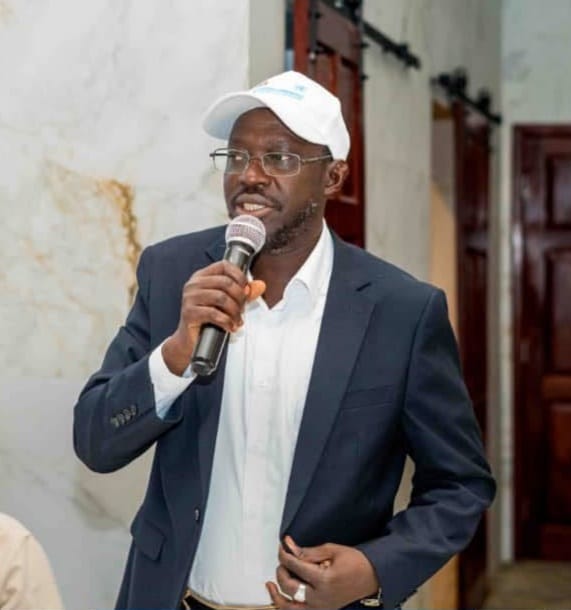
Speaking to this medium in August 2026, Jawneh stated that gender-based violence (GBV) takes many forms and affects individuals based on their gender. However, Beakanying has placed particular emphasis on FGM and child marriage due to the profound impact these practices have on the lives, health, and future opportunities of women and girls.
“It affects their overall well-being, particularly their health,” he explained. “As an organisation focusing on human rights, we recognise these practices as direct violations of those rights.”
Over the years, Beakanying has invested resources in advocacy and community engagement, particularly in rural areas, through its flagship LAHIDO program. LAHIDO, a Mandinka word meaning “promise,” brings together parents, grandparents, religious leaders, traditional authorities, and other community members to discuss the harmful effects of FGM and child marriage.
Jawneh emphasised that the approach involves not only informing communities but also listening to them to understand why these practices persist.
“Through these initial conversations, we found that some individuals continue these practices for economic reasons,” he explained.
He noted that some families marry off their daughters early due to fears they may "spoil themselves," while financial challenges can hinder parents from keeping their daughters in school.
In response, the organisation introduced the LAHIDO Charter, a community-based commitment to protecting girls from harmful practices. Under this initiative, parents and grandparents sign a pledge promising to protect their daughters and granddaughters from FGM. Village heads, known as Alkalolu, and Village Development Committee leaders act as moral guarantors and witnesses to this commitment.
The initiative also encourages community leaders to get involved from the time a child is born.
“When a baby girl is born in the village, leaders are notified. They then approach the family to educate them on the dangers of FGM. Once the family is convinced, they sign the LAHIDO pledge, with the Alkalo and the Village Council of Elders serving as formal witnesses to ensure the child's protection,” Jawneh said.
Weak Enforcement
While community education remains central to Beakanying's mission, Jawneh pointed out that weak law enforcement is one of the major factors allowing FGM to persist. Although The Gambia criminalised FGM in 2015, he noted that the limited number of prosecutions has weakened the law's deterrent effect.
“People are aware that the law exists and carries a prison sentence, but because there are few legal consequences—no reports and no court cases—the practice continues unchecked,” he explained.
He acknowledged that enforcement cannot rely solely on the police. Enforcement heavily depends on public cooperation.
FGM occurs within tight-knit communities where people are aware of it, yet very few choose to report these violations. The police cannot be everywhere and cannot stop what they do not know about. Good citizenship requires community members to report these violations,” he stated.
Cross-Border Cutting
Jawneh raised concerns about female genital mutilation (FGM) occurring across borders, particularly due to the close social, cultural, and familial ties between The Gambia and Senegal.
He noted that the movement of families and children between the two countries creates opportunities for girls to be taken across the border to undergo FGM.
“Children often travel between both countries for holidays, leaving young girls highly vulnerable to being subjected to FGM abroad. Enhanced border monitoring is vital to protect them,” he emphasised.
He called for stronger collaboration between authorities and communities on both sides of the border to prevent families from exploiting cross-border movement to bypass the law.
Religious Misconceptions
Jawneh also identified the influence of some religious leaders as a significant challenge in the fight against FGM. He stated that certain influential figures continue to promote FGM as a religious obligation, despite the lack of any basis for such claims.
“Influential religious leaders pose a major challenge by falsely teaching that FGM is a religious requirement. In a deeply religious society, people trust these figures without question,” he explained.
While he acknowledged that religious leaders have the right to express their views, he stressed that misinformation about FGM must be contested, especially when it affects parents' decisions about their daughters.
Change Begins at Home
According to Jawneh, the fight against FGM cannot rely solely on government institutions, NGOs, or law enforcement agencies. He believes families must take personal responsibility for protecting children. He shared his own experience of choosing to protect his daughters from the practice, despite facing opposition from family members.
“When I first took a stand against having my daughters cut, my family accused me of going against Islam,” he recalled.
This experience highlighted for him that advocacy must begin within the home.
“Education and personal conviction are essential to breaking this cycle; you cannot advocate against FGM while allowing it to happen in your own home,” he stated.
Jawneh believes that sustained community engagement, stronger enforcement, responsible religious leadership, and individual commitment are all necessary to create lasting change.
“We will not stop until every single child in this country is safe. We must maintain this momentum because we owe it to our youth and future generations,” he concluded.
This story is part of the "Breaking the Silence: Voices of FGM Survivors" podcast funded by the Foundation for Women's Health, Research and Development (FORWARD UK).
Author: Nelson Manneh
PC: Mr. Nfamara Jawneh
Comments (1)