
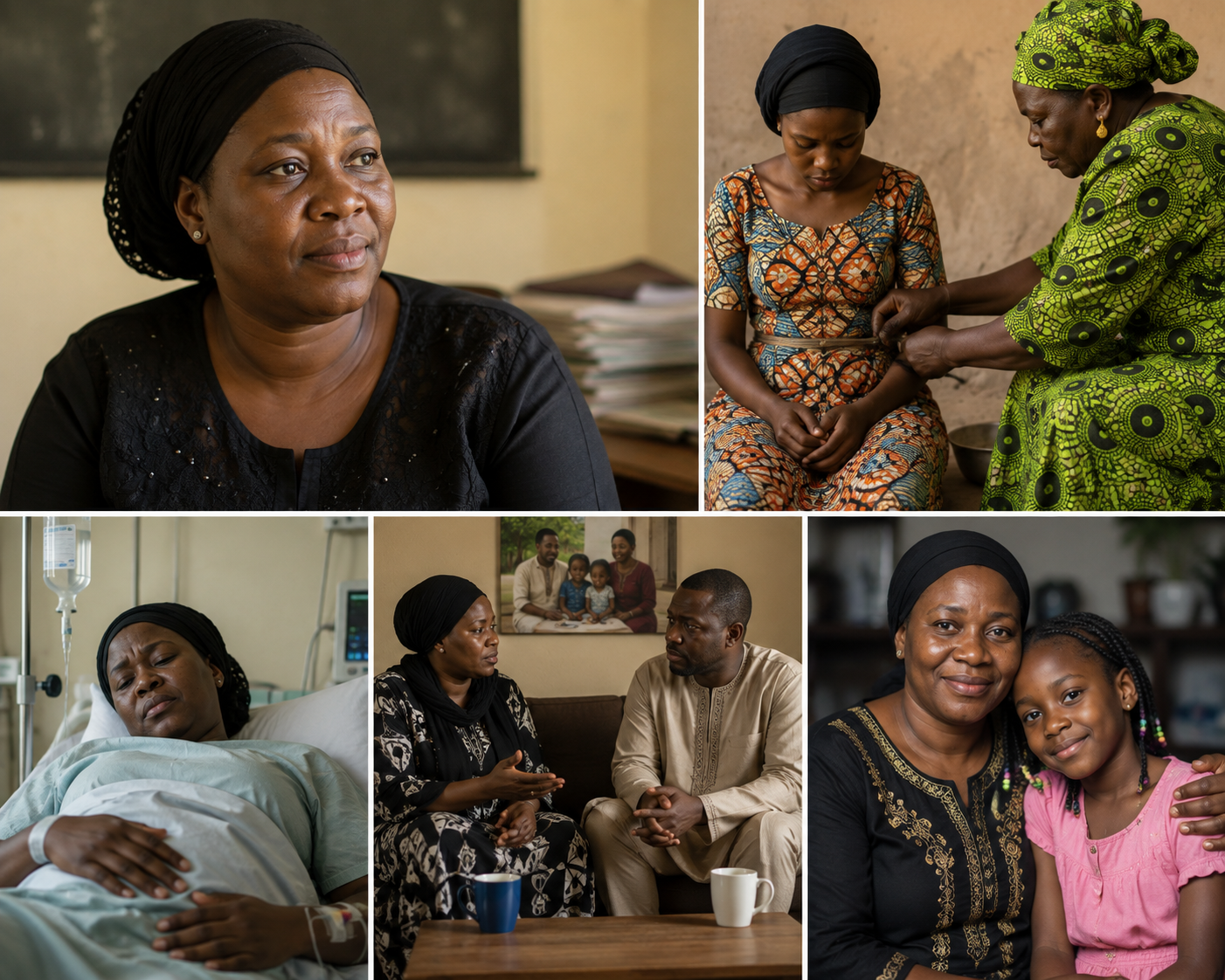
Today, Faal is raising two boys and a girl. She feels that three children are enough. After what her body endured during pregnancy and childbirth, she has chosen to protect her health and avoid the fear of another traumatic delivery.
In an interview in August 2026, she revealed that her decision was not made lightly.
A Childhood Decision Made for Her
Faal was circumcised as a child, but she only became fully aware of what had happened to her years later. Before marrying her husband in 2011, her grandmother informed her that she had been circumcised and "sealed," a form of FGM involving infibulation. This procedure was described as a way to protect her from teenage pregnancy and preserve her virginity until marriage.
The night before her wedding, Faal was taken to a village in Niumi to be unsealed. What should have been a significant transition in her life turned into another painful ordeal. She remembers being instructed to sleep with her husband immediately after the procedure to prevent the wound from closing again.
This experience was not only physically painful but also deeply humiliating; she had no say in what happened to her body. Years later, that loss of control would haunt her during motherhood.
When Childbirth Became a Source of Fear
Faal's first childbirth experience brought the consequences of her childhood cutting into sharp focus. During delivery, she lost a significant amount of blood. Medical personnel informed her that the complications and intense pain were connected to the FGM she had undergone. This experience left a lasting impact. Her difficulties extended beyond childbirth.
She also experienced bleeding during sexual intercourse and often concealed her pain from her husband, not wanting him to feel responsible. Then came her second and third pregnancies.
Unlike her first delivery, both of these required surgical operations. For Faal, each pregnancy served as a reminder of what her body had endured and what another pregnancy might entail.
She still recalls the pain of those procedures years later. By the time she had her third child, Faal began to contemplate whether she could endure childbirth again seriously.
The Decision to Stop
Faal’s decision to stop having children was not about rejecting motherhood; she had already experienced the love and responsibility that came with raising a family. Instead, her choice was rooted in concerns for survival, health, and peace.
She sat down with her husband to explain that their family felt complete. They had three children—two boys and a girl—and she wanted to focus on raising and educating them. Faal made it clear that she would use contraception to prevent another pregnancy. Involving her husband in the discussion was important to her. She wanted the decision to be open rather than made in silence.
She even mentioned that if he wanted more children, he could consider seeking another marriage. Faal's decision reflects the difficult choices faced by some survivors of female genital mutilation (FGM), where pregnancy itself can evoke fear and memories of physical trauma.
For women like Faal, the question goes beyond wanting more children; it also involves whether their bodies can safely endure another pregnancy and delivery. However, Faal’s story does not end with her decision to stop having children. She is determined that her daughter will not inherit the negative experiences that shaped her own life.
Faal's mother continues to believe that girls should undergo FGM and has occasionally called Faal to suggest that her daughter is now old enough to be circumcised. Faal firmly refuses to entertain this idea. This disagreement has created tension within the family, but Faal is unwilling to compromise.
She understands what it means to have decisions about one’s body made by others. She knows the physical consequences of a procedure performed on her as a child and the fear that can resurface when pregnancy and childbirth bring those memories back.
Faal wants something different for her daughter: the freedom to grow up without experiencing the same pain. Ultimately, Faal’s story is about more than the complications she faced; it is about a mother reclaiming a decision that was taken away from her as a child. While FGM significantly impacted her experiences of marriage, intimacy, and childbirth, she has decided it will not dictate her daughter’s future.
She has chosen not to have another child, not because she does not value motherhood, but because she believes her health and well-being matter too.
For Faal, three children are enough. Now her priority is to raise, educate, and protect her daughter from the practice that left her with lasting scars.
Her journey—from being a girl whose body was altered without her consent to a mother determined to protect her daughter—is a quiet act of resistance.
While she cannot change what happened to her, she can influence what happens next. For Faal, that means choosing peace over pain and ending the cycle for good.
This story is part of the "Breaking the Silence: Voices of FGM Survivors" podcast funded by the Foundation for Women's Health, Research and Development (FORWARD UK).
Author: Nelson Manneh
PC: AI-Generated
Comments (1)