
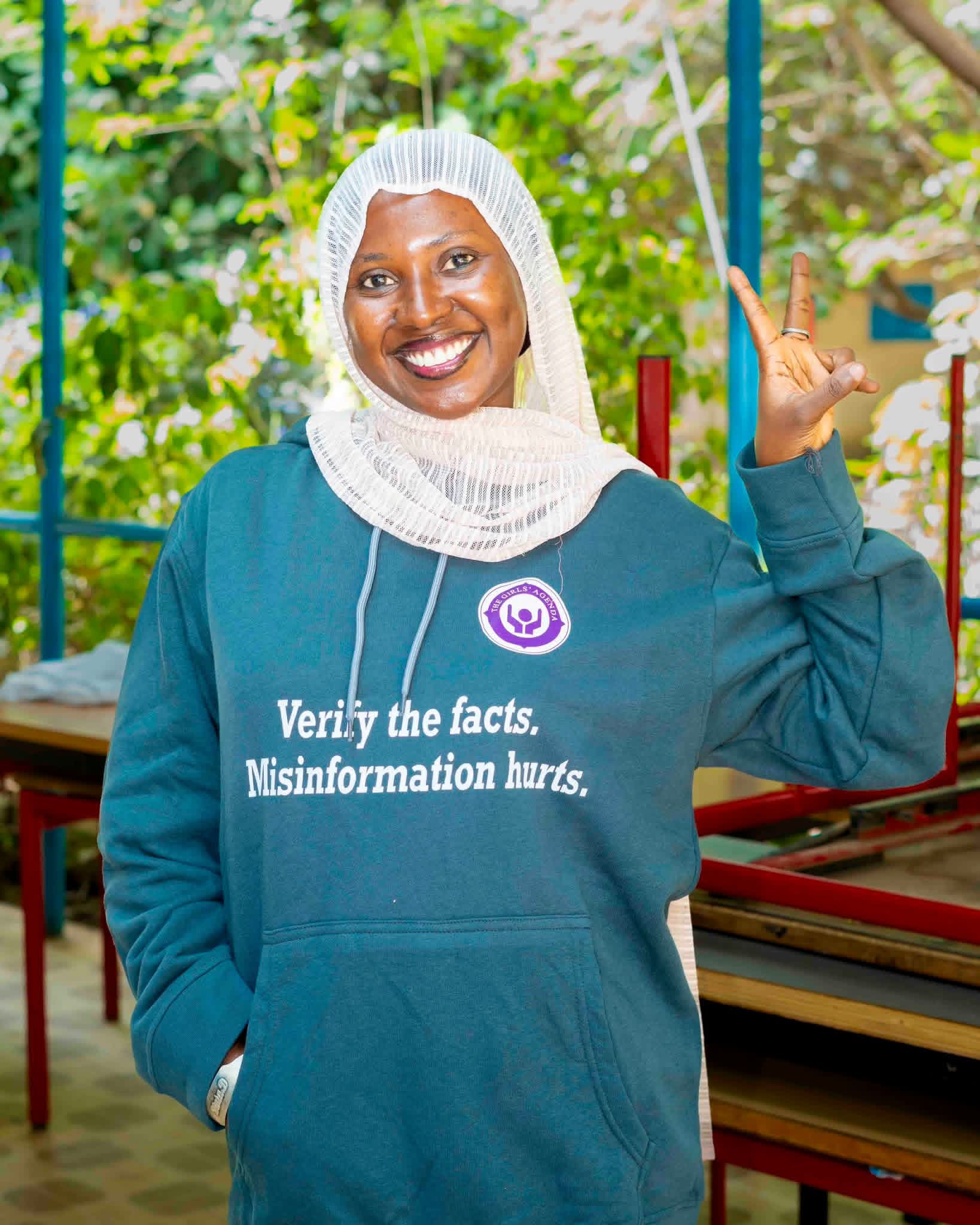
For Binta D. Bojang, Programs Assistant at The Girls' Agenda, the attempt to repeal the law was more than a political debate—it was a painful reminder that progress in the fight against female genital mutilation (FGM) can never be taken for granted.
Speaking to this medium in July 2026, at the Girls' Agenda's Office in Brikama, West Coast Region, Binta recalls, "Nobody saw it coming. It just happened, and everyone panicked."
For years, civil society organisations, government institutions, health professionals, religious leaders, and community activists have invested enormous effort in educating communities about the dangers of FGM. Awareness campaigns, community dialogues, survivor testimonies, and legal reforms have gradually shifted public attitudes. The 2015 ban on FGM became one of the country's strongest protections for girls.
When that protection was suddenly challenged, many feared that years of progress could be erased overnight.
"Seeing the law challenged in the National Assembly and subsequently in the Supreme Court really shook us," Bojang says. "But it also taught us that even when you are doing an incredibly good job, there will always be people who try to jeopardise your work."
Rather than weakening their resolve, the challenge strengthened it.
As a survivor-led and women-led organisation, The Girls' Agenda has renewed its commitment to ensuring that FGM becomes a practice of the past. The organisation continues to engage communities across The Gambia through awareness campaigns and advocacy, refusing to let the setback derail its mission.
One of the organisation's most effective strategies is dialogue.
From village elders and traditional communicators to parents, adolescent girls, young men, and religious leaders, The Girls' Agenda believes meaningful conversations remain the most powerful tool for changing deeply rooted beliefs.
Bojang says many religious leaders initially defend FGM because they believe it is a religious obligation. However, open discussions often reveal that many simply lack accurate information about its devastating consequences.
"There is power in knowing the facts," she explains. "There is power in seeing evidence of the harm FGM has caused."
She says that once religious leaders are presented with medical evidence and encouraged to examine religious teachings more closely, many begin to reconsider their positions. Discussions about severe forms of FGM, particularly infibulation, often lead participants to acknowledge that such practices have no religious justification.
The organisation has also found that creating safe spaces is essential for honest conversations.
During intergenerational dialogues, younger women often hesitate to speak when older women are present, while in mixed discussions men frequently dominate the conversation because of deeply ingrained social norms.
To overcome these barriers, The Girls' Agenda first meets separately with women, men, youth, and elders before bringing everyone together for a joint dialogue. This approach allows each group to express themselves freely before engaging in a collective discussion built on mutual understanding and respect.
Beyond community engagement, Bojang believes stronger implementation of existing laws remains one of the country's greatest challenges.
While The Gambia has domesticated important regional and international legal instruments, including the Maputo Protocol, she argues that enforcement—not legislation—is where more work is needed.
Working alongside government institutions while also holding them accountable has become a cornerstone of The Girls' Agenda's advocacy.
"Partnership does not prevent accountability," she says. "As civil society, we have the responsibility to hold government institutions accountable for the commitments they have made."
Support from development partners has further strengthened these efforts.
Through funding from Amplify Change, the organisation has expanded community mobilisation activities, developed child-friendly educational materials—including an FGM cartoon translated into several local languages—and intensified engagement with religious leaders and other key stakeholders.
For Bojang, however, the fight against FGM is deeply personal.
Like many of her colleagues at The Girls' Agenda, she is a survivor herself. That shared experience gives the organisation's work both urgency and authenticity.
She knows firsthand the courage it takes for survivors to speak publicly about their experiences, particularly when they are accused of fabricating their stories or speaking out for financial gain.
"No one is paid to share such deeply personal and emotional experiences," she says. "Talking about what you went through during FGM is not something everyone dares to do."
Her message to survivors is one of hope and resilience.
"Continue to be courageous and continue sharing your story," she says. "We never truly know the impact a single story can have or how many lives it can change."
As debate over FGM continues in The Gambia, Bojang believes lasting change will not come through confrontation alone, but through education, respectful dialogue, and the unwavering determination of those who refuse to let girls lose the protection generations of advocates fought so hard to secure.
This story is part of the "Breaking the Silence: Voices of FGM Survivors" podcast funded by the Foundation for Women's Health, Research and Development (FORWARD UK).
Author: Halimatou Ceesay
PC: Binta D. Bojang
Comments (0)
No comments yet. Be the first to comment!