
That concern was brought into sharp focus on Tuesday 14th July, 2026, as the NHRC released its 2025 State of Human Rights Report, warning that FGM remains a serious threat to the lives, health and rights of women and girls in The Gambia.
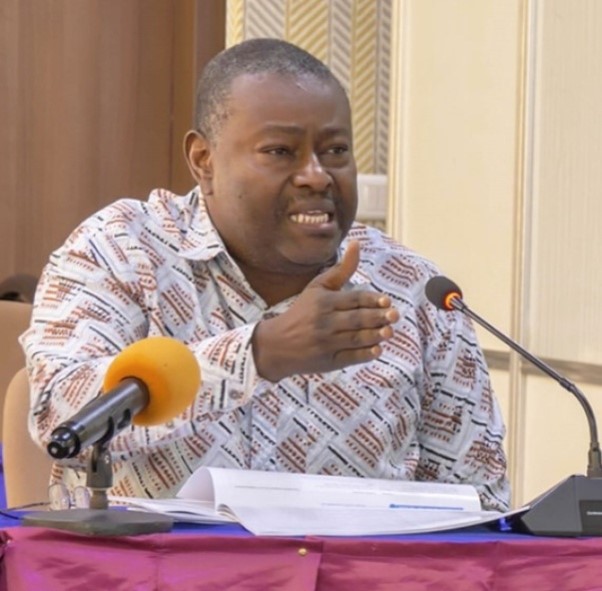
At the launch of the report, NHRC Chairperson Emmanuel Joof addressed journalists and described female genital mutilation (FGM) as a serious violation of bodily integrity and fundamental human rights. He emphasised that the country's anti-FGM law must continue to be enforced while a constitutional challenge is ongoing before the Supreme Court.
"The Women's (Amendment) Act 2015, which bans FGM in The Gambia, must be enforced fully, fairly, and without fear or favour," Joof stated.
His remarks come amidst a heated national debate regarding the future of this legislation.
While campaigners for women's rights continue to defend the law as a lifesaving measure, some groups seeking to overturn the ban argue that it restricts religious and cultural freedoms. The Supreme Court is currently considering a constitutional challenge filed by an independent National Assembly Member and seven other plaintiffs.
Until the court rules, however, the law remains in force. For the NHRC, the debate is no longer simply about culture or tradition—it is about the lives that continue to be lost.
The Commission's report highlights the death of a one-month-old baby girl in August 2025, allegedly following Female Genital Mutilation. Three women, including the infant's mother, were arrested and charged in connection with the case, which is currently before the courts.
According to the report, at least two other babies have also reportedly died from complications linked to the practice.
Those deaths, Joof said, are a painful reminder that FGM continues despite its criminalisation.
Reports suggest that the practice persists in The Gambia, as evidenced by the tragic deaths of three babies allegedly due to FGM/C.
He added that beyond the immediate physical injuries, the practice leaves many mothers living in fear.
"The practice poses a severe risk to the life and health of victims, and some mothers have stated that they are constantly on edge, wary of leaving their daughters in the care of family members."
For advocates working to end FGM, such testimonies reveal how deeply rooted the practice remains within some communities and families, where decisions affecting girls are sometimes made without parental consent.
The NHRC also called on the Ministry of Gender, Children and Social Welfare and the Gambia Police Force to ensure the effective implementation of the Women's (Amendment) Act 2015.
Its report calls on the Ministry of Gender, Children and Social Welfare to strengthen public education, expand community engagement, and work more closely with religious and traditional leaders to dispel misconceptions surrounding FGM.
The Commission also urged authorities to intensify efforts to eliminate both Female Genital Mutilation and child marriage, describing the two practices as major barriers to the protection of children's rights.
As the nation awaits the Supreme Court's judgment, the Commission has joined the proceedings as amicus curiae—a friend of the court—to provide an independent human rights perspective.
For Joof, however, the central issue remains unchanged.
The question, he suggests, is not simply whether the law survives the constitutional challenge, but whether Gambian girls can grow up free from a practice that continues to claim lives, inflict lifelong trauma and deny them the fundamental right to bodily autonomy.
Until that becomes a reality, the Commission says the responsibility to protect girls rests with government institutions, communities, families and every citizen committed to safeguarding human rights.
Author: Nelson Manneh
PC: NHRC Chairperson Emmanuel Joof
Comments (0)
No comments yet. Be the first to comment!